
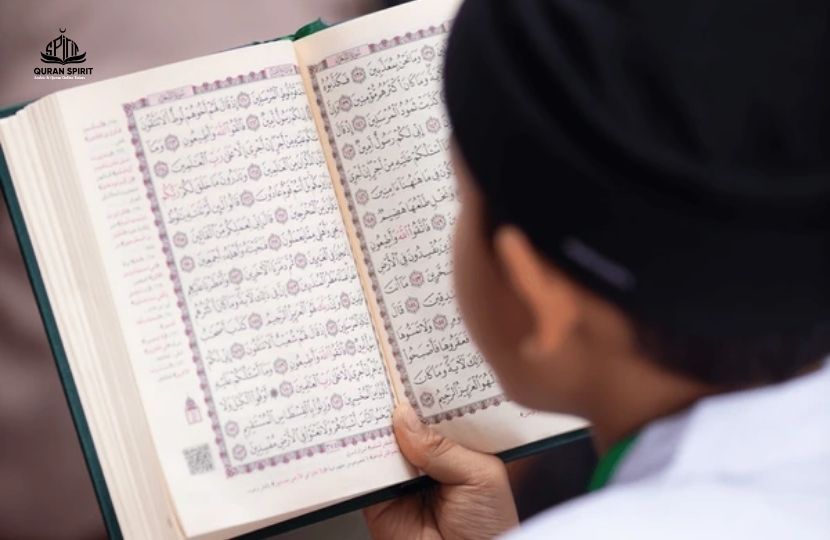
Have you ever listened to two Quran reciters and noticed subtle differences in their pronunciation, vocal rhythm, or even slight variations in word endings? Far from being mistakes, these beautiful variations are part of a sacred oral tradition known as Qirat. At Quran Spirit, we believe that understanding the science behind Quranic recitation enriches your spiritual connection and deepens your appreciation for how the divine word of Allah (SWT) has been preserved across generations. Through our Quran Recitation course, students can learn proper pronunciation, Tajweed, and the principles of Qirat with guidance from qualified scholars.
What is Qirat?
Linguistically, Qirat (قرآءات) comes from the Arabic word Qara’a, meaning “to recite” or “to read.” In Islamic sciences, Qirat refers to the various authentic methods of reciting the Holy Quran.
These methods are not dialectical accents created by individuals; rather, they are distinct, divine modes of recitation transmitted through unbroken chains of narration (Isnad) directly from the Prophet Muhammad (ﷺ), who received them from the Angel Jibreel (AS).
Each Qirat adheres strictly to three fundamental conditions:
- Authentic Transmission: Traced through an unbroken chain of reliable narrators back to the Prophet (ﷺ).
- Arabic Grammar: Fits the classical rules of the Arabic language.
- Uthmanic Script: Conforms to the original skeletal text (Rasm) established during the caliphate of Uthman ibn Affan (RA).
The Wisdom Behind Different Qira’at
The Prophet Muhammad (ﷺ) said: “The Quran was revealed in seven Ahruf (dialects/modes).” (Sahih al-Bukhari).
Allah (SWT) revealed the Quran in multiple modes to make its recitation easy for different Arab tribes with distinct dialects, vocal inclinations, and linguistic nuances. This divine flexibility preserved unity while celebrating diversity—demonstrating that the core message remains perfectly intact regardless of dialectical variation.
The 7 Mutawatir Types of Qirat
In the 4th century AH, the scholar Imam Ibn Mujahid compiled seven prominent modes of recitation that met the highest standard of authentic transmission (Mutawatir—transmitted by so many reliable narrators that collusion on a lie is impossible).
Each Qirat is named after the master reciter (Imam) who codified it, along with two primary transmitters (Rawi) who documented their method:
| Qirat | Origin | Famous Transmitters | Key Characteristics |
| 1.Nafi’ al-Madani | Madinah | Warsh & Qalun | Widely recited in North & West Africa (especially Warsh). Distinctive rules on prolonged vowels (Madd). |
| 2.Ibn Kathir al-Makki | Makkah | Al-Bazzi & Qunbul | Features smooth connections between words and unique rules regarding pronoun extensions (Haa al-Silah). |
| 3. Abu Amr al-Basri | Basra (Iraq) | Al-Duri & Al-Susi | Known for major assimilation (Idgham Kabeer) where adjacent letters merge across word boundaries. |
| 4. Ibn Amir ad-Dimashqi | Damascus (Syria) | Hisham & Ibn Dhakwan | The oldest transmission chain among the seven; preserves unique vocal emphasis (Hamzah rules). |
| 5. Asim ibn Abi al-Najud | Kufa (Iraq) | Hafs & Shu’bah | Hafs ‘an Asim is the default recitation used by ~95% of Muslims worldwide today due to its clarity. |
| 6. Hamzah al-Kufi | Kufa (Iraq) | Khalaf & Khallad | Features distinct pauses (Sakt) before glottal stops (Hamzah) and strong vowel slants (Imalah). |
| 7. Al-Kisai | Kufa (Iraq) | Al-Layth (Al-Harith) & Al-Duri | Renowned for extensive use of Imalah (tilting a vowel sound toward Kasrah), reflecting classical Kufan speech. |
The 3 Additional Authentic Types of Qirat
To complete the Ten Authentic Recitations (Al-Qira’at Al-Ashr), later scholars such as Imam Ibn al-Jazari documented three additional valid and authentic recitations (Mashhur):
- Abu Ja’far al-Madani (Transmitted by Ibn Wardan & Ibn Jammaz): The primary teacher of Imam Nafi in Madinah; known for distinct nasalization (Ghunnah) rules.
- Ya’qub al-Hadrami (Transmitted by Ruways & Rauh): Widely practiced in Basra; highly regarded for precise articulation of stopping points (Waqf).
- Khalaf ibn Hisham (Transmitted by Ishaq & Idris): Based on the Kufan tradition; builds upon the principles of Imam Hamzah with slight simplifications.
Together, these 10 Qira’at represent the complete, unbroken oral heritage of Quranic recitation preserved to this day.
How to Choose the Right Qirat for Hifz
If you are pursuing or completing your Hifz course (Quran memorization), deciding which Qirat to learn next is an exciting milestone. Here is how to navigate your choice:
1. Start with the Standard: Hafs ‘an Asim
If you are beginning your memorization journey, stick with Hafs ‘an Asim. It is the global standard for Mushaf printings, Islamic education, and congregational prayers. Building a solid foundation in Hafs ensures you master Tajweed fundamentals without confusing rules.
2. Consider Your Geographic & Cultural Context
- If you live in or plan to teach in North or West Africa (Morocco, Algeria, Senegal), learning Warsh ‘an Nafi’ is ideal.
- In parts of Sudan, Chad, or Somalia, Al-Duri ‘an Abi Amr remains widely practiced.
3. Seek Sanad (Ijazah) Progression
Once you have memorized the entire Quran in Hafs ‘an Asim and earned your Ijazah, scholars typically recommend studying Warsh ‘an Nafi’ or Qalun next to build versatility. Advanced students eventually study Shatibiyyah—the classical text detailing all seven or ten Qira’at simultaneously.
4. Work with a Qualified, Certified Tutor
You cannot learn Qirat solely from audio recordings. Different recitations alter subtle vocal mechanics, vowel lengths, and stop rules. You need a tutor who holds a direct Ijazah with an unbroken chain of transmission to correct your recitation in real time.
Elevate Your Quranic Journey with Quran Spirit
Understanding Qirat opens a deeper door to the linguistic majesty and divine preservation of the Quran. Whether you are a beginner taking your first Tajweed steps or an advanced student seeking an Ijazah in Qirat, Quran Spirit offers one-on-one online guidance from certified Al-Azhar and native Arab scholars.
Ready to start your journey? Enroll in our tailored Quran Recitation, Tajweed, Hifz, or Qirat courses today and experience the beauty of Quranic recitation from the comfort of your home.
