
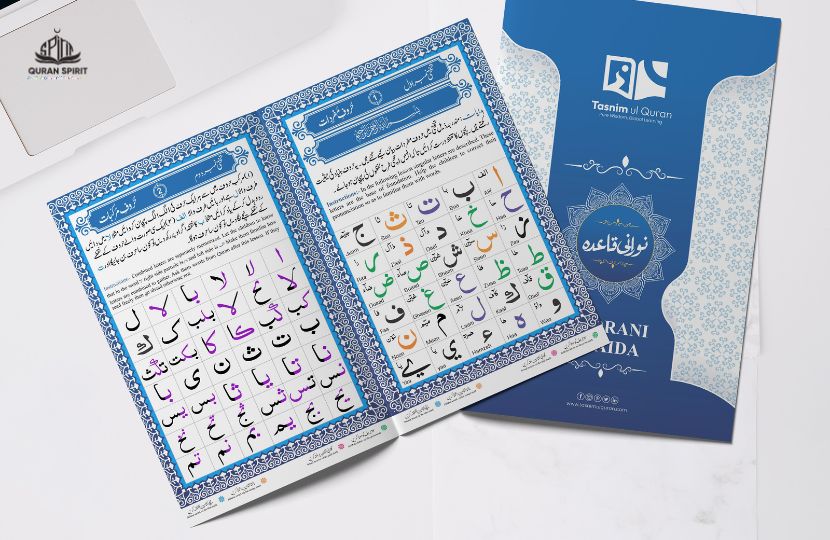
For beginners—whether children or adults—the foundation of the Quran reading journey starts with the Noorani Qaida course. This booklet is designed specifically to teach the basics to non-Arabic speakers. It corrects pronunciation, Arabic letter recognition, and essential Tajweed rules; Noorani Qaida acts as the stepping stone to fluent Quran recitation. A common question many students and parents ask before starting is: How long does it take to learn Noorani Qaida?
In this guide, the tutors at Quran Spirit have outlined the schedule, important factors affecting the pace of learning, and useful suggestions to assist you or your child in completing the booklet effectively.
Average Time Needed to Learn Noorani Qaida
On average, completing the entire Noorani Qaida takes anywhere from 3 to 6 months for a consistent student. However, the timeline varies depending on the learner’s age, daily practice habits, and overall learning pace.
Here is a closer look at how different factors and learner types influence the timeframe:
1. Duration for Kids vs. Adults
- Children (Ages 5–10): Kids typically take 4 to 7 months to finish Noorani Qaida. While young minds absorb pronunciation and sounds quickly, younger children often need shorter lessons and more repetition to retain letter shapes and joinings.
- Adults and Teens: Adults usually complete it faster, taking roughly 2 to 4 months. Adults benefit from strong cognitive comprehension, so they grasp rules like Madd (elongation), Ghunnah (nasalization), and Sukoon faster, though mastering exact articulation points (Makharij) may require focused practice.
2. Impact of Class Frequency and Study Schedule
Your weekly study commitment plays the largest role in determining how quickly you complete the book. Here is a realistic breakdown based on different schedules:
- 5 Days a Week (30 minutes/day) — 2 to 3 months
This is the most effective approach for rapid progress. Daily practice builds strong muscle memory, keeps previously learned material fresh, and creates a rhythm that makes each new lesson easier to absorb. Students who follow this schedule rarely need to spend time re-learning what they covered before — consistency does that work for them automatically. - 3 Days a Week (30–45 minutes/day) — 3 to 5 months
A balanced and sustainable schedule for most learners. The slightly longer sessions compensate for the gaps between practice days, and the pace remains steady without feeling overwhelming. This works especially well for students managing work, school, or family commitments alongside their studies. - 1 to 2 Days a Week (45–60 minutes/day) — 6 to 9 months
A lighter schedule is still a valid path — progress just takes longer. The main challenge here is retention: with several days between sessions, a portion of each lesson is typically spent reviewing what was covered last time before new material can be introduced. Students on this schedule benefit greatly from short daily revision of even 5 to 10 minutes between sessions, even if formal study only happens once or twice a week.
3. Understanding the Content Breakdown
The Noorani Qaida consists of around 17 lessons. The time spent on each lesson differs based on difficulty:
- Basic Letters & Vowels (Lessons 1–6): Focuses on single letters, Harakat (Fatha, Kasra, Damma), and combined letters. Most students complete this phase in 3 to 5 weeks.
- Intermediate Pronunciation & Rules (Lessons 7–12): Covers Tanween, Sukoon, and basic rules of elongation. This takes about 4 to 6 weeks.
- Advanced Tajweed Integration (Lessons 13–17): Focuses on Shaddah, rules of Nun Sakinah, Meem Sakinah, and fluent word connecting. This phase requires 4 to 6 weeks of careful practice.
4. Key Factors Affecting Your Learning Speed
- Consistency: Daily 15-minute practice sessions yield far better results than a single two-hour session once a week.
- Qualified Instruction: Learning under the supervision of a certified Tajweed tutor ensures mistakes are corrected immediately, preventing bad habits that slow down progress later.
- Prior Familiarity with Arabic: Students who already recognize Arabic letters will naturally move through the first few lessons significantly faster.
Conclusion
By maintaining a consistent routine, practicing daily, and studying with a qualified quran tutor, you or your child can smoothly transition from learning basic letters to confidently reading verses from the Quran.
Ready to start your Quranic learning journey? Explore expert-led, one-on-one Noorani Qaida courses at Quran Spirit today and build a solid foundation from the comfort of your home!
