
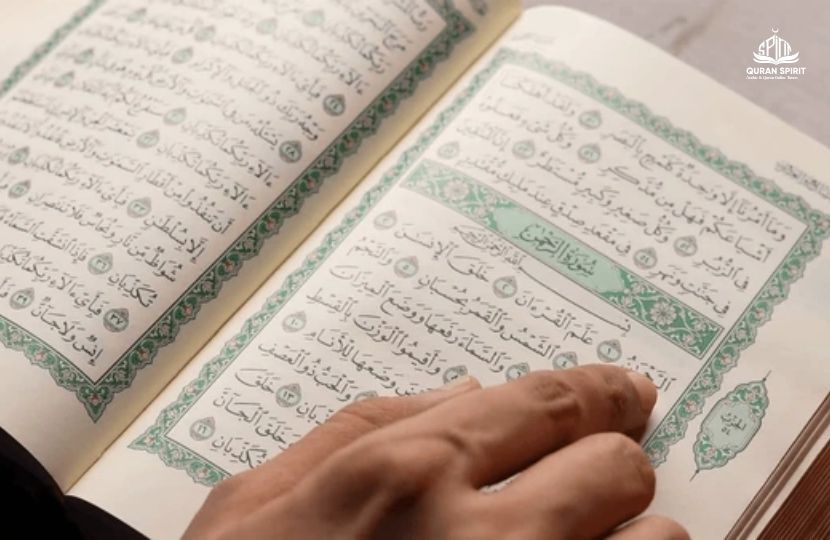
Completing the memorization of the Holy Quran is a profound milestone. However, reaching the finish line is not the end of the journey; it is the beginning of a lifelong commitment. The Prophet Muhammad (ﷺ) reminded us: “Preserve the Quran, for by Him in Whose Hand is my soul, it runs away faster than camels that are released from their ropes” (Sahih al-Bukhari).
At Quran Spirit, we understand this commitment. To help you maintain, strengthen, and deepen your bond with the Divine Words
10 Strategies To Stay Connected With the Quran After Completing Hifz
1. Establish an Unbreakable Daily Daur (Revision Routine)
Consistency is the cornerstone of retention. Establish a fixed daily revision goal based on the strength of your memory:
- Strong Retention: 1 Juz (Para) daily (completing a full cycle in 30 days).
- Building Retention: 0.5 Juz daily, focusing heavily on accurate recitation.
Treat your daily revision time as an unmovable appointment in your calendar—preferably right after Fajr or before sleep when your mind is quietest.
2. Implement the “Three-Tier Revision” Method
For long-term retention, structure your daily preparation into three distinct parts:
- New Revision (Sabqi): Re-memorise or heavily review the Juz you revised yesterday.
- Recent Revision (Manzil/Daur): Revise the 3 to 5 Juz preceding your current placement.
- Old Revision: Read your designated Juz of the day to keep the full text fresh.
This layered approach prevents newly strengthened portions from fading while keeping the entire Quran active.
3. Recite Your Portions in Daily & Sunnah Prayers
One of the most effective ways to test and solidify your Hifdh is outside of a quiet reading room. Incorporate your daily revision into your Fard, Sunnah, and Tahajjud prayers. Standing before Allah and reciting from memory without looking at a Mushaf forces high concentration and builds deep confidence.
4. Lead Taraweeh or Pair Up with a Sabaq Partner
Teaching or leading others creates healthy accountability:
- Lead Taraweeh: Committing to leading Ramadhan prayers ensures you prepare months in advance thoroughly.
- Find a Listening Partner: Recite your daily portion to a family member, fellow Hafiz, or qualified teacher who can catch subtle errors in tashkeel (vowel markings) or Tajweed.
5. Master the Mutashabihat (Similar Verses)
Frequent slips often happen where verses closely resemble one another across different Surahs. Keep a dedicated notebook or use colored markers in your study Mushaf to note similarities:
- Highlight unique keywords in similar verses.
- Link specific phrasing to the theme of the Surah.
- Create mental associations to navigate branching verses smoothly.
6. Stick to One Page Layout (Mushaf)
Visual memory plays a massive role in Hifz program. Always use the same print or digital layout of the Quran (such as the standard 15-line Saudi/Madani Mushaf). Changing prints scrambles your visual memory of where verses begin and end on a page.
7. Connect Meaning to Memory (Tafseer)
Memorisation becomes exponentially easier when you understand what you are reciting. Spend time reading a reliable translation or Tafseer (exegesis) alongside your revision:
- Understanding the context of a Surah anchors the flow of verses.
- Storylines, legal rulings, and thematic shifts act as natural memory prompts.
- It elevates your recitation from simple repetition to heartfelt contemplation (Tadabbur).
8. Utilize Audio Listening During Passive Hours
Immersion keeps the rhythms of the Quran alive in your mind. Listen to renowned Qaris during your daily commute, exercise, or household chores. Active listening helps correct minor pronunciation slips and solidifies the natural cadence of difficult passages.
9. Teach Others What You Have Learned
The Prophet (ﷺ) said: “The best among you are those who learn the Quran and teach it” (Sahih al-Bukhari). Teaching children, family members, or beginners keeps you sharp. Explaining Tajweed rules and catching another student’s mistakes keeps your own foundation rock-solid.
10. Guard Your Heart and Senses
Spiritual retention requires spiritual clarity. Classical scholars often emphasized that the Quran is divine light, and light does not remain in places obscured by sin or distraction. Mindful media consumption, guarding your eyes and tongue, and maintaining Sincere Intent (Ikhlas) create the spiritual discipline needed to hold the Quran in your heart.
Conclusion
Completing Hifz is the beginning of a lifelong journey of preserving and living by the Holy Quran. With consistent revision, sincere intentions, and a strong connection with its teachings, you can keep its words alive in your heart. Join a Quran revision course at Quran Spirit to strengthen your memorization with expert guidance. Book your free trial class today and continue your journey with the Quran.
