
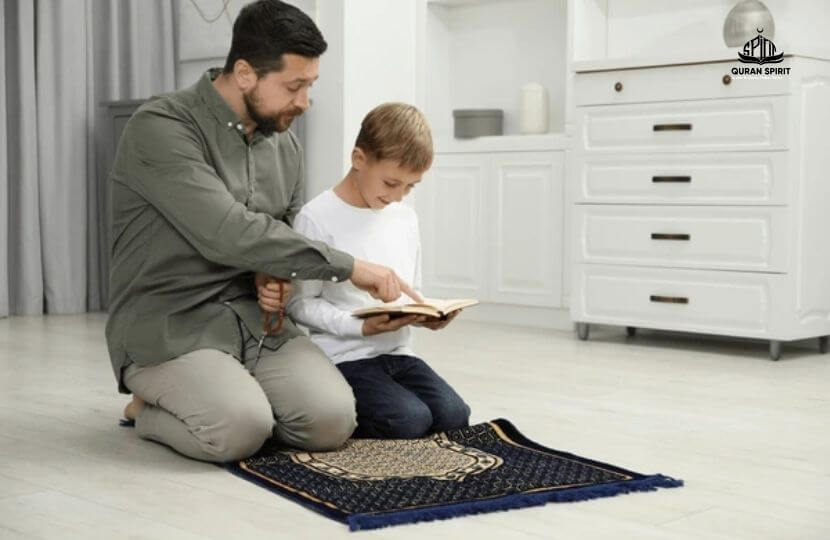
Maintaining consistency in Hifz is often harder than memorization itself, especially for children. While enrolling in a hifz course for kids provides structure, true consistency comes from routine, encouragement, and a positive connection with the Quran. When motivation fades after the initial excitement, the right approach helps children stay engaged and committed to their Hifz journey.
Tips for Kids to Stay Consistent in Memorising Quran
Here are some important tips for hifdh students to stay consistent in their hifz course journey.
1. Utilize the Fajr Time
The most successful Huffadh often share one habit: they utilize the time after Fajr. The brain is most receptive in the early morning, and the house is generally quiet. Even 15–20 minutes before school can be more productive than an hour in the evening when the child is physically and mentally drained.
2. Prioritize Revision Over New Lessons
A common pitfall in memorization is focusing exclusively on new material, which often leads to a child forgetting what they learned only a week prior and losing confidence in their progress. To build a resilient memory, it is more effective to dedicate roughly 70% of each session to revising the “Recent Past”—specifically the last 5 to 10 pages learned—while spending only 30% on new content. This ratio ensures that the foundation remains secure and the child feels a consistent sense of mastery over their previous efforts.
Furthermore, consistency and quality must always take precedence over speed. You should never allow a child to move on to a new verse until the previous day’s lesson is perfectly solid and recited without hesitation. By enforcing this standard, you prevent a “snowball effect” of accumulated errors and ensure that every new step is taken from a position of absolute certainty.
3. Keep the Goals “Micro.”
On days when your child feels overwhelmed by schoolwork or physical exhaustion, resist the urge to skip Hifdh entirely. Instead, intentionally scale back the workload to accommodate their energy levels. If the daily goal is typically five lines, reduce it to just one; if memorising new material feels impossible, shift the focus entirely to reciting a previously learned Surah. Maintaining the rhythm of the practice is far more important than the volume of content covered on any single day.
The primary objective is to keep the habit alive and protect the sanctity of the routine. By choosing consistency over intensity during stressful periods, you instill a lifelong discipline that survives through challenges.
4. Create a “Hifdh Sanctuary.”
The environment your child learns in profoundly dictates their behavior and focus, so it is essential to designate a specific, quiet corner of the house solely for Quran time.
Within this space, implement a “One Mushaf Policy” to ensure your child uses the same physical copy of the Quran every single day. Visual memory is a cornerstone of Hifz; over time, the brain begins to “photograph” the exact layout of the page, allowing the student to mentally recall the position of specific verses and markers.
At Quran Spirit, our tutors emphasize this visual consistency to help students anchor their memory and build confidence more rapidly. To honor the sanctity of this time, you must also rigorously remove all digital distractions, keeping tablets and phones entirely out of sight.
When the surroundings are consistent and free from interruptions, the mind can enter a deeper state of concentration.
5. Use the “Listen-First” Method
Children are naturally gifted auditory learners, and you can significantly ease their Hifdh journey by letting them listen to a recording of a world-class Qari—such as Sheikh Al-Husary for his exceptional clarity—10 to 15 times before they even attempt to memorize.
This auditory immersion ensures that the correct pronunciation and rhythm are internalized first, preventing the formation of mistakes that are difficult to correct later. When a child hears the melody of the verses repeatedly, the brain begins to map out the structure of the words before the formal study even begins.
By the time they sit down for their focused session, the flow of the verses will already feel familiar, allowing them to focus on retention rather than struggling with unfamiliar phonetic patterns.
6. Celebrate Milestones
Don’t wait until they finish a whole Juz to celebrate.
- Create a Progress Tracker on the wall with stickers.
- Offer small incentives: “Once you finish this Surah, we’ll go to your favorite park.”
- Positive reinforcement builds a psychological association between the Quran and happiness.
7. Be Their Role Model
Children do what we do, not what we say. If they see you struggling with your own recitation or taking time out for the Quran daily, they will view Hifz as a lifelong pursuit rather than a “subject” they need to pass. Sit with them, revise your own Surahs, and show them that the Quran is your companion, too.
Conclusion
Staying consistent in Hifdh is a test of patience for both parents and children. There will be days of tears and days of triumph. The goal is not just to complete memorisation, but to ensure the Quran stays rooted in their heart. By keeping Hifz sessions short, focused, and filled with love, Quran Spirit helps children go beyond memorizing words—guiding them to build a deep, lasting relationship with Allah that stays with them for a lifetime.
